
You’re orchestrating a symphony when you design your outdoor space. You’ll strategically position water features, furnishings, and focal points to create spatial harmony. You’ve got options—tiered fountains, koi ponds, bubble features—each transforming your patio’s atmosphere. You’re balancing aesthetics with function, sustainability with ambiance. But which elements truly maximize your garden’s potential? The answer depends on understanding how these components interact.
Water Feature Installation Options
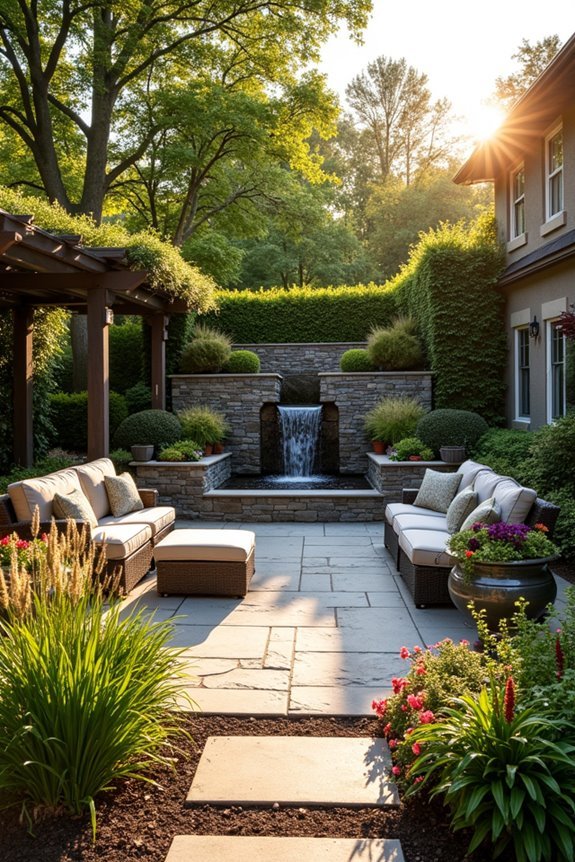
Whether you’re drawn to the tranquil sound of flowing water or the visual appeal of standing basins, you’ll find several installation methods suited to your patio layout. You can position fountain types—tiered, wall-mounted, or freestanding—based on available space and electrical access points. Pond installations require excavation and liner placement, demanding more extensive preparation than standalone features. Pondless waterfalls offer water circulation without full basin construction, reducing installation costs considerably. You’ll want to assess your patio’s grading and proximity to utilities before committing. Consider water feature types that align with your budget constraints; basic fountains range from $200–$800, while custom pond systems reach $2,000–$5,000. Evaluate drainage patterns to prevent pooling around adjacent hardscaping.


Fountains: Focal Point Features

Among water features, fountains stand out as the most versatile option for commanding attention in your patio layout. You’ll find tiered, wall-mounted, and pedestal fountain styles that suit various spatial configurations and design aesthetics.
Position your fountain at your patio’s center or along a garden edge to create visual hierarchy. Consider scale carefully—oversized fountains overwhelm compact spaces, while undersized ones disappear in expansive areas.
For maintenance tips, you’ll need to establish a regular cleaning schedule to prevent algae buildup and mineral deposits. Install a recirculation pump with an accessible filter system. Check water levels weekly during warmer months, as evaporation occurs rapidly. Choose fountains with removable basins for easier seasonal draining and storage, protecting your investment during winter months.


Tiered Fountain Cascades Elegantly
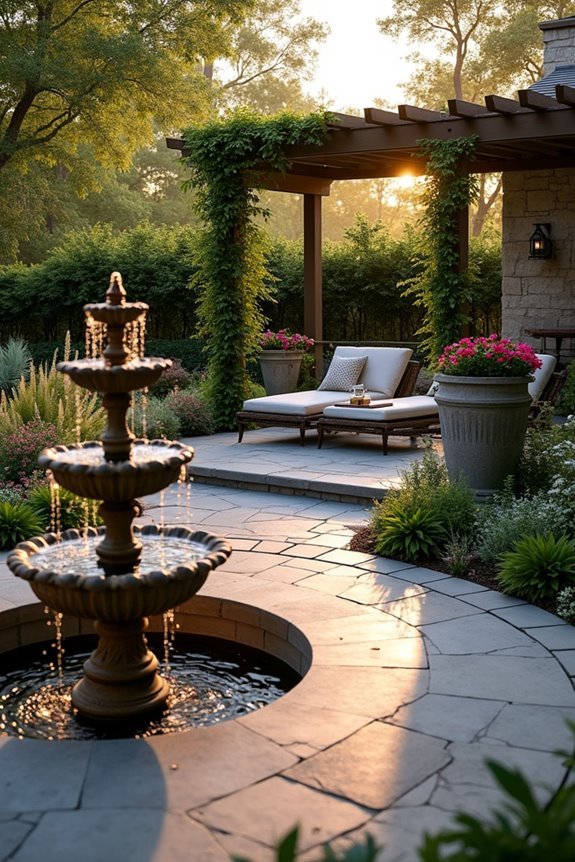
Tiered fountains create visual movement through cascading water that flows progressively downward from one basin to the next, establishing dynamic depth within your patio layout. You’ll appreciate how elegant designs transform ordinary outdoor spaces into sophisticated retreats.
When you incorporate tiered landscaping around your fountain, you establish layered visual interest that guides the eye vertically. Position taller tiers at focal points while lower basins frame surrounding plantings. This spatial arrangement creates rhythm and proportion.
You can maximize functionality by selecting fountains with adjustable water flow rates, allowing you to control cascade intensity. Material choices—stone, ceramic, or composite—determine durability and aesthetic compatibility with your patio design. Consider placement near seating areas where you’ll enjoy the water’s soothing sounds and visual elegance throughout your garden space.

Water Recirculation Pump Systems
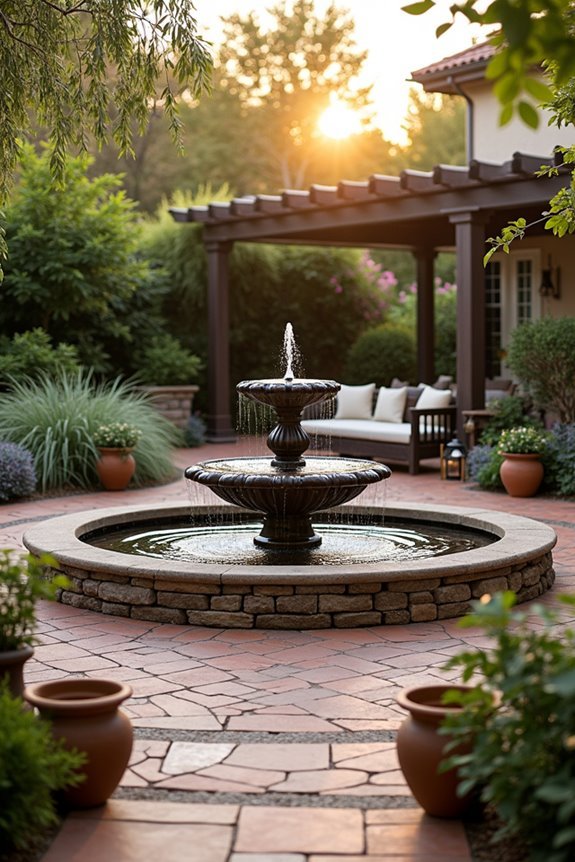
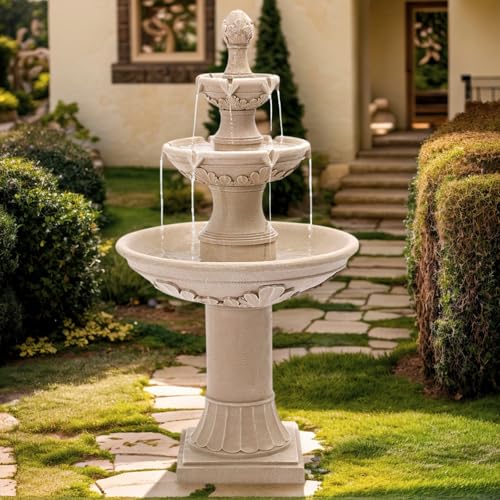
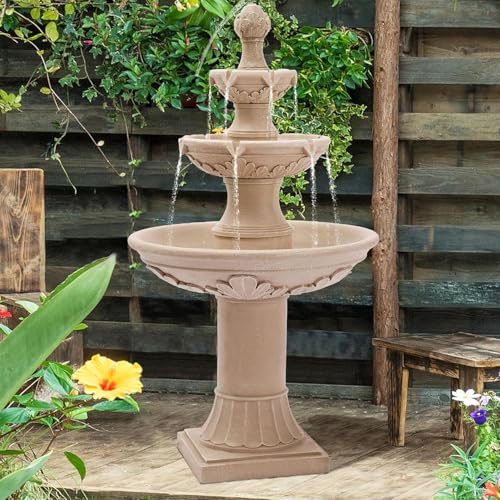
Water recirculation pump systems form the operational heart of your fountain, continuously moving water from the basin back to the upper tiers through a closed-loop mechanism. You’ll want to select a pump sized appropriately for your fountain’s volume and elevation changes.
During pump installation, position the intake valve below the water line to prevent air entry. Connect tubing securely to minimize leaks and energy loss. Most residential fountains require 500-2000 GPH (gallons per hour) capacity.
For maintenance tips, you’ll need to clean intake filters monthly, preventing debris accumulation that reduces efficiency. Check water levels regularly, as evaporation demands top-offs. Inspect tubing connections seasonally for cracks or disconnections. Before winter, drain your system entirely and store the pump indoors to prevent freeze damage and extend its operational lifespan.


Koi Pond Construction Basics

Building a koi pond requires you to apply similar circulation principles to fountain systems, but on a larger, more complex scale. You’ll need to establish robust filtration systems that remove waste and maintain water clarity for your fish. Position your pond in a location receiving partial shade to prevent excessive algae growth. You should incorporate aquatic plants strategically around the perimeter and shallows; they’ll provide oxygen and natural filtration. Aim for a minimum depth of three feet to protect koi during winter months. Install proper aeration alongside your filtration systems. Before fish stocking, allow your pond to cycle for several weeks. Schedule regular pond maintenance tasks: monitor water chemistry, clean filters, and trim plants. This systematic approach guarantees a thriving aquatic ecosystem.

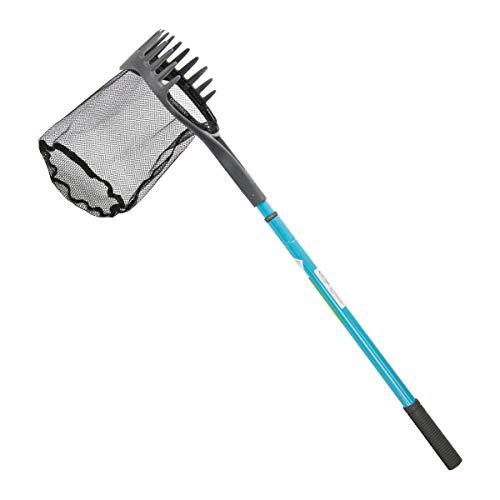

Fountains: Focal Point Features
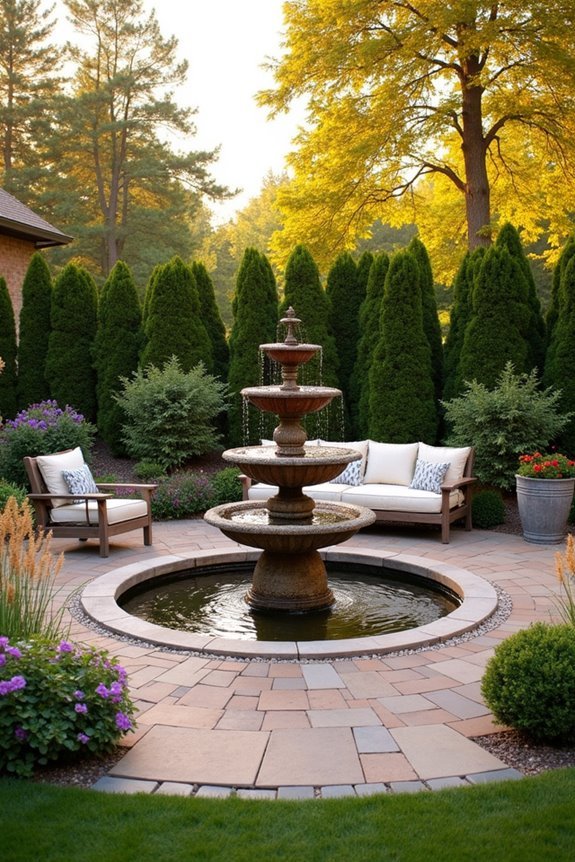
The fountain’s visual and auditory presence transforms your patio into a dynamic gathering space. You’ll want to evaluate fountain materials carefully—stone offers timeless elegance, while fiberglass provides durability and lighter weight. Copper develops distinctive patina over time, creating visual depth.
Position your fountain strategically at your patio’s center or along sightlines to maximize impact. Design styles range from contemporary minimalist to classical tiered structures. Contemporary fountains feature clean geometry and smooth surfaces, whereas classical designs incorporate ornamental details and sculptural elements.
You’ll achieve ideal focal point placement by making sure the fountain’s height commands attention without overwhelming surrounding plantings. Select materials that complement your existing hardscape. Install proper drainage and circulation systems before finalizing placement to guarantee functionality and longevity.


Wall-Mounted Fountain Design Options
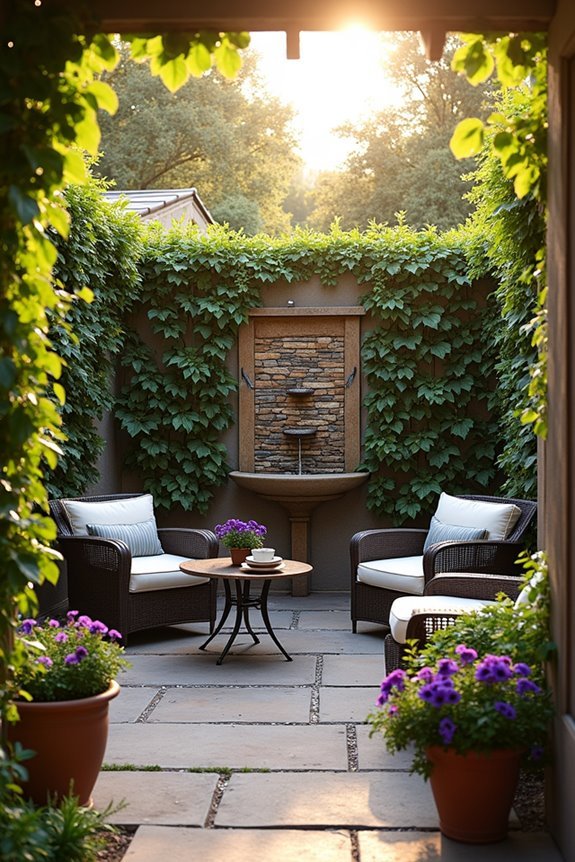
When you’re working with limited patio space, wall-mounted fountains offer an elegant solution that maximizes your layout’s functionality. You’ll find these fixtures come in various design materials, including stone, ceramic, metal, and composite resin, each offering distinct durability and aesthetic styles.
Consider your patio’s architectural character when selecting options. Contemporary spaces benefit from sleek stainless steel or minimalist concrete designs, while traditional gardens suit ornamental stone or classical bronze finishes.
Installation positioning matters greatly. You’ll want to mount fountains at eye level against feature walls, creating vertical visual interest. This spatial arrangement draws the gaze upward, making compact patios feel more expansive.
Evaluate water circulation systems carefully. Recirculating pumps require electrical access and regular maintenance. By choosing wall-mounted designs strategically, you’re transforming underutilized vertical surfaces into sophisticated focal points.


Bubble Fountains Add Ambient Sound
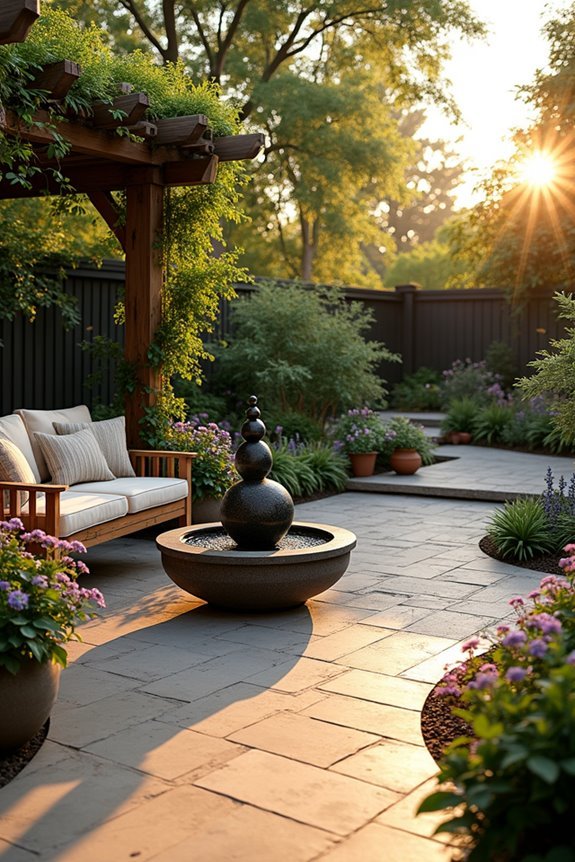
Gentle water ripples create soothing acoustic environments that’ll transform your outdoor space into a tranquil retreat. Bubble fountains operate by circulating water through stacked stone or ceramic spheres, generating consistent white noise that masks urban traffic and neighborhood sounds.
These compact water features occupy minimal footprint, making them ideal for urban garden integration. Position bubble fountains strategically within your patio layout—corner placements amplify acoustic benefits while maintaining sightlines across your outdoor area.
Bubble fountain benefits include low maintenance requirements and energy efficiency. The recirculating system uses modest water volumes, reducing consumption compared to traditional cascading fountains. Install your unit on level ground near electrical outlets, ensuring proper drainage pathways. This systematic approach maximizes both functional performance and spatial harmony in your garden design.


Rainwater Collection Basin Design

As you move from decorative water features to functional irrigation systems, rainwater collection basins offer a systematic approach to garden hydration and resource conservation. You’ll want to select basin materials based on durability and permeability—concrete, fiberglass, or permeable stone each serve distinct spatial functions within your garden layout.
Your basin design should incorporate multiple rainwater filtration techniques to maintain water quality. You can layer filtration systems using gravel, sand, and activated charcoal to remove debris and contaminants before water reaches your plants.
Position basins strategically beneath downspouts and slope surrounding terrain toward collection points. You’ll maximize catchment efficiency by calculating basin volume against your garden’s square footage and local precipitation patterns. This systematic approach transforms rainfall into a reliable, sustainable irrigation resource for your outdoor living space.


Solar-Powered Fountain Pump Systems
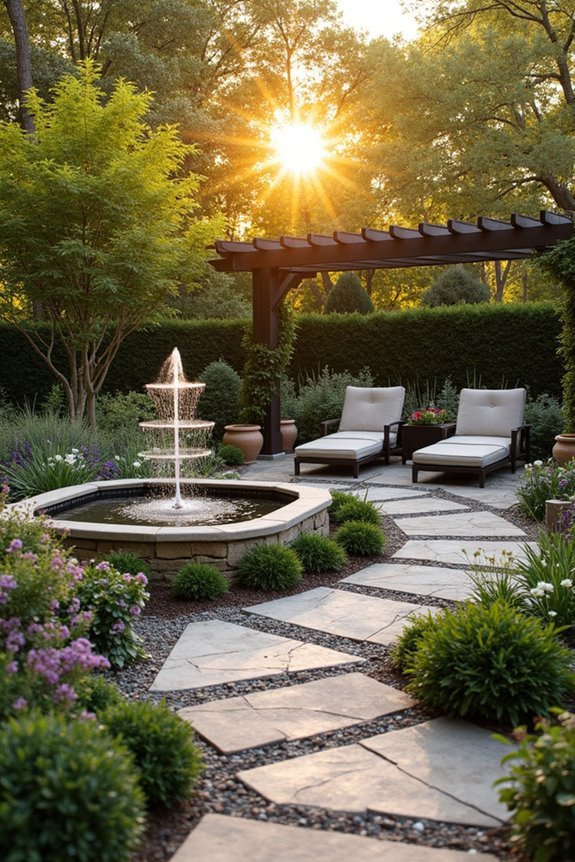
Three core components define solar-powered fountain pump systems: the photovoltaic panel, the submersible pump, and the water circulation pathway. You’ll position the photovoltaic panel to capture maximum sunlight, typically angling it toward south-facing exposure. The submersible pump sits at your basin’s base, drawing water upward through tubing you’ve strategically routed through your garden layout.
Your system harnesses sustainable energy, eliminating electrical infrastructure and ongoing power costs. The pump’s flow rate correlates directly with sunlight intensity—stronger sun means increased circulation. You can modulate water output by adjusting panel angle or installing flow restrictors.
Aesthetically, these systems enhance garden design without visible wiring. You’ll integrate the fountain’s visual and auditory elements seamlessly into your landscape, creating focal points that draw viewers’ attention while maintaining the clean, uncluttered appearance you’re seeking throughout your outdoor space.