
You’re making a gentle shift in your plant care approach by selecting ceramic vessels designed for horticultural success. These pots don’t merely sit passively—they work actively to transform your growing environment. Their engineered drainage holes and porous structure establish the precise conditions your roots require. But what you’re really getting is protection against the silent threats that compromise plant health. There’s more to uncover about how ceramic composition fundamentally changes soil dynamics.
Ceramic Drainage Hole Benefits

Drainage holes are essential in ceramic pots because they’ll prevent waterlogging and root rot by allowing excess moisture to escape from the soil. You’ll maintain ideal soil aeration and promote healthier root systems through proper water management.
Ceramic pots with drainage holes offer superior functionality without compromising ceramic aesthetics. You can select from various finishes, colors, and textures while ensuring your plants receive adequate drainage. The porous nature of ceramic allows gradual moisture evaporation, creating a balanced growing environment.
From an environmental sustainability perspective, ceramic drainage pots last considerably longer than plastic alternatives, reducing waste. You’ll minimize your ecological footprint by investing in durable, reusable containers. Quality ceramic pots withstand seasonal temperature fluctuations and UV exposure, maintaining their structural integrity across multiple growing seasons while supporting robust plant development.


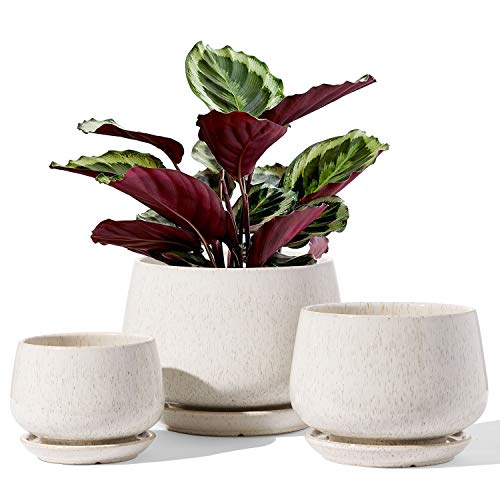
Prevents Root Rot Effectively

When you’re cultivating plants in containers, root rot represents one of the most destructive fungal and bacterial pathologies you’ll encounter, yet ceramic pots with drainage holes actively mitigate this risk. These drainage apertures establish critical moisture management by channeling excess water away from the root zone, maintaining ideal soil aeration. You’ll find that proper drainage prevents waterlogging, which creates anaerobic conditions that promote pathogenic fungi like Pythium and Phytophthora. Ceramic’s porous structure further enhances evaporation, reducing prolonged moisture retention around roots. By implementing drainage holes, you’re creating an environment where root health thrives through improved gas exchange and controlled hydration. This straightforward mechanism transforms your ceramic containers into effective preventative tools against root rot’s devastating effects, ensuring your plants develop robust, disease-resistant root systems.
Improves Air Circulation Around Roots

Because roots require constant oxygen exchange to metabolize nutrients and maintain cellular respiration, ceramic pots with their porous walls facilitate superior aerobic conditions compared to non-porous alternatives. You’ll benefit from this enhanced gas permeability, which directly strengthens root health by preventing anaerobic stress and microbial pathogenesis.
The airflow benefits extend beyond passive oxygen diffusion. When you select ceramic containers, you’re actively promoting transepidermal water vapor movement through pot walls. This micro-ventilation reduces soil moisture saturation, diminishing conditions favorable to pathogenic fungi and bacteria that compromise root systems.
You can observe measurable improvements in plant vigor when utilizing porous pot materials. Enhanced oxygenation stimulates robust root development, accelerated nutrient uptake, and improved overall plant metabolism. Your plants’ physiological resilience increases substantially with superior root health achieved through optimized atmospheric conditions within the growing medium.

Enhances Nutrient Absorption Rates

As root oxygenation improves through ceramic pot permeability, you’ll notice a concurrent enhancement in your plant’s nutrient uptake capacity. When roots access adequate oxygen, they actively absorb minerals more efficiently, accelerating nutrient cycling throughout your plant’s vascular system.
Ceramic pots facilitate this process by maintaining optimal moisture levels while preventing waterlogging. You’ll observe stronger photosynthetic activity and accelerated growth rates as your plant’s roots develop robust nutrient absorption networks. This enhanced uptake directly correlates with improved soil health, as microbial communities thrive in well-aerated environments.
The porous structure of ceramic materials creates excellent conditions for nutrient availability. Your plant won’t merely survive—it’ll flourish. By selecting ceramic pots, you’re investing in a growing medium that promotes superior nutrient assimilation and sustained botanical performance.


Reduces Soil Compaction Issues
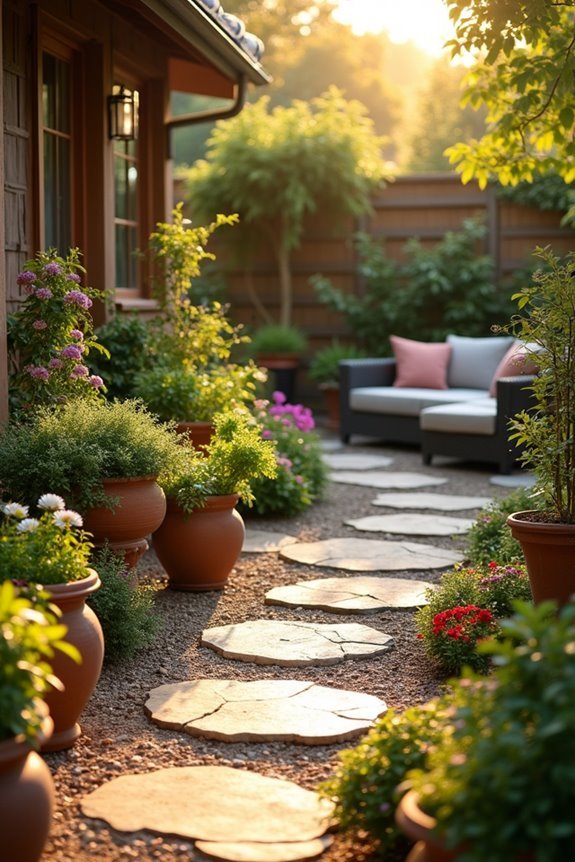
Soil compaction directly inhibits root penetration and restricts water drainage, yet ceramic pots naturally counteract this problem through their inherent porosity. You’ll find that porous materials facilitate superior soil aeration techniques by enabling consistent oxygen circulation throughout the root zone. When you select ceramic containers, you’re implementing a compaction prevention strategy that maintains ideal soil structure over extended growing periods.
The microporous structure of ceramic allows water to permeate laterally, preventing the dense, airless conditions that inhibit root development. You’ll observe that roots establish more robust networks in these conditions, accessing nutrients more efficiently. Additionally, the gradual evaporative process through ceramic walls creates micro-air channels within your substrate, continuously rejuvenating oxygen availability.
This passive aeration mechanism eliminates your reliance on frequent physical manipulation or amendment additions, providing sustainable compaction mitigation that benefits plant physiology long-term.

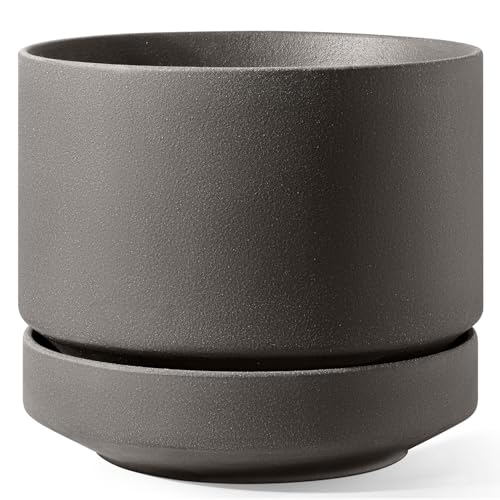

Improves Water Drainage Speed

Water drainage speed directly determines whether your plants thrive or succumb to root rot, and ceramic pots excel where other materials falter. You’ll appreciate how ceramic’s porous structure facilitates rapid water percolation, preventing waterlogging that damages root systems.
The material’s inherent porosity supports superior drainage techniques by allowing excess moisture to escape through pot walls and drainage holes simultaneously. This dual-pathway system you’ll employ reduces standing water that promotes fungal infections and oxygen deprivation.
You’ll find ceramic’s moisture retention properties ideally balanced—the material absorbs excess water while releasing it gradually. This prevents the extreme fluctuations between saturation and desiccation that stress plants. The porous matrix you’re utilizing maintains consistent moisture levels, protecting delicate root structures and promoting healthier growth patterns throughout your botanical collection.


Supports Beneficial Microbial Growth

The porous ceramic matrix you’ve selected creates an excellent microenvironment for mycorrhizal fungi and beneficial bacteria that establish symbiotic relationships with plant root systems. These microbial communities thrive within the pot’s interconnected pore structure, which facilitates optimal gas exchange and moisture retention simultaneously.
You’re promoting soil health by maintaining conditions that encourage microbial colonization. The ceramic material doesn’t leach harmful chemicals that might inhibit beneficial organisms, unlike some synthetic alternatives. As these microorganisms proliferate, they enhance nutrient availability, strengthen plant immunity, and improve root penetration throughout the growing medium.
You’re fundamentally creating a living ecosystem within your pot. This biological activity directly translates to more vigorous plant development and greater resilience against pathogens. Your choice of ceramic pots actively supports the underground network crucial for plant well-being.


Prevents Fungal Infections Naturally
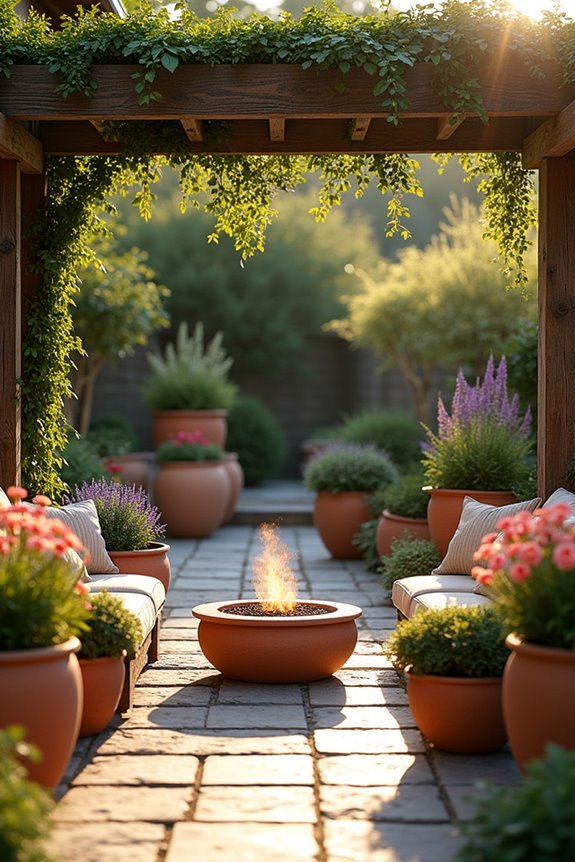
While beneficial microorganisms strengthen your plant’s defenses, ceramic pots themselves offer an additional protective mechanism against fungal pathogens. The porous structure of ceramic naturally inhibits fungal proliferation by promoting air circulation around root systems and preventing excess moisture accumulation—conditions that fungi require to thrive.
You’ll find that ceramic’s inherent properties work as natural remedies, reducing your dependence on chemical fungicides. The material’s breathability allows water to evaporate through pot walls, maintaining ideal soil moisture levels critical for plant health. This moisture regulation directly suppresses fungal development without compromising nutrient availability.
Additionally, ceramic’s slightly alkaline composition creates an environment less favorable for fungal colonization compared to non-porous alternatives. By selecting ceramic pots, you’re implementing a passive yet effective defense system that protects your plants while supporting their overall physiological functions.


Increases Pot Longevity Through Durability

Ceramic pots’ll outlast most conventional planting containers by decades when you maintain them properly, thanks to their crystalline structure‘s inherent resistance to physical degradation and environmental stressors. Your pot material considerations should prioritize ceramic’s superior longevity compared to plastic alternatives, which degrade under UV exposure and temperature fluctuations.
The structural integrity you’ll gain through ceramic construction directly correlates with extended pot lifespan. Proper plant weight balance prevents uneven stress distribution that causes cracking or deterioration. Ceramic’s non-porous surface resists nutrient salt accumulation, reducing interior degradation.
Consider terracotta’s breathability benefits, though it’s more fragile than glazed ceramic. High-fired ceramics exhibit exceptional durability, withstanding freeze-thaw cycles without compromising integrity. Your investment in quality ceramic pots yields decades of reliable containment, making them economically superior to frequent plastic replacements.
Ceramic Durability Withstands Freezing
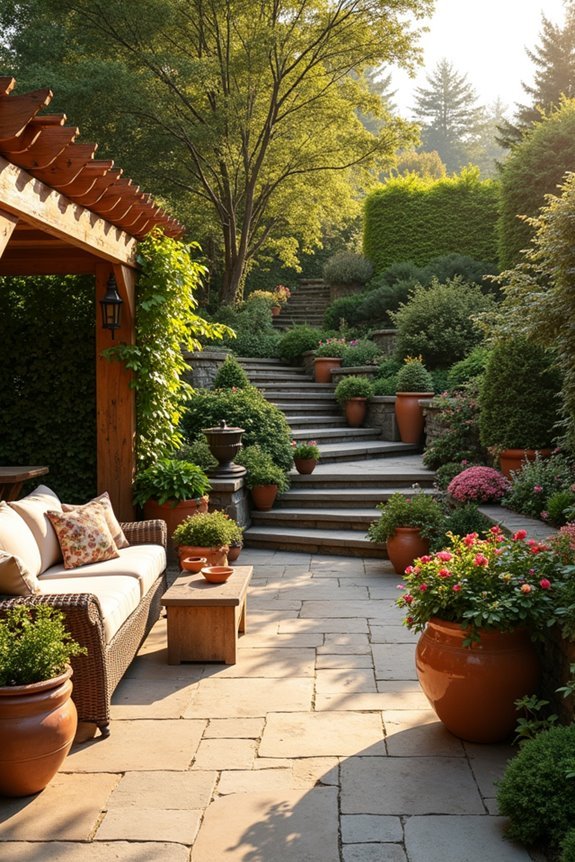
Your ceramic pots’ resilience extends particularly well to seasonal temperature extremes, especially the freeze-thaw cycles that damage lesser containers. High-fired ceramic maintains structural integrity through outdoor temperature variations without cracking or degrading.
When water-saturated soil freezes, it expands considerably. Quality ceramic’s non-porous glazed surfaces resist moisture penetration, preventing ice formation within the pot walls themselves. This ceramic freeze resistance distinguishes premium vessels from inferior alternatives that fail catastrophically under repeated freeze-thaw stress.
The material’s thermal stability allows gradual temperature adjustments without stress fractures. You’ll find your ceramic pots withstand harsh winters consistently, season after season, when properly fired at high temperatures during manufacturing.
This durability makes ceramic an investment that justifies its initial cost through years of reliable performance in challenging climates.