You’ve got thousands of ways to transform your garden into an outdoor masterpiece. Strategic placement of ornaments, mirrors, and lighting can completely reshape your space’s visual appeal. From colorful sculptures to solar-powered pathways, you’ll uncover practical techniques that elevate both aesthetics and functionality. What you’re about to explore will reveal the systematic approach professionals use to create stunning landscapes. The following strategies aren’t complicated—they’re just strategic.
Add Colorful Garden Ornaments
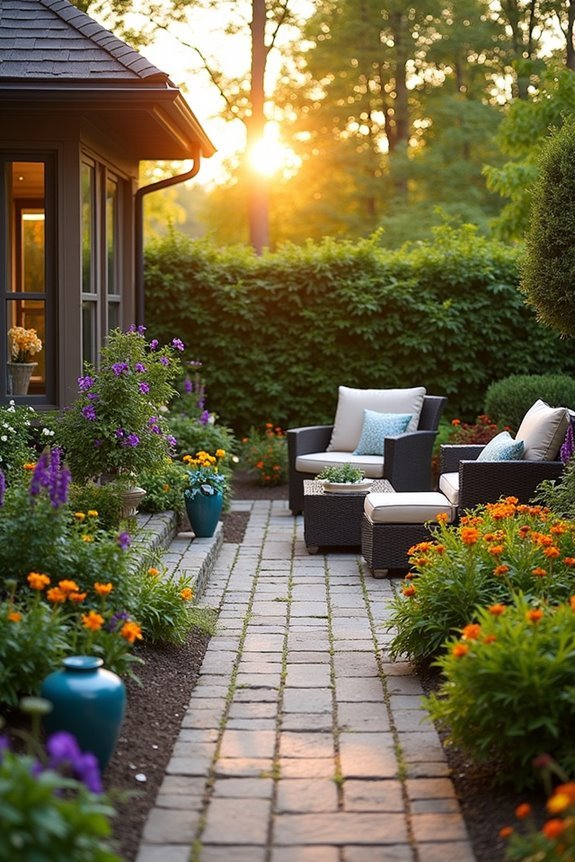
When you’re planning your garden’s visual appeal, ornaments serve as focal points that’ll transform ordinary landscapes into curated outdoor spaces. Colorful sculptures strategically positioned throughout your garden create visual interest and draw the eye to specific areas. You’ll want to select pieces that complement your existing landscape design while maintaining aesthetic cohesion.
Artistic windchimes contribute both visual and auditory elements to your garden environment. Position them where they’ll catch prevailing breezes and remain visible from primary viewing angles. Consider scale carefully—ornaments should be proportionate to your garden’s dimensions to avoid overwhelming the space.
Material selection matters greatly. Choose weather-resistant options like cast stone, metal, or treated wood that’ll withstand seasonal exposure. You’ll achieve maximum impact by grouping complementary pieces strategically rather than scattering them randomly throughout your landscape.


Plant Flowering Shrubs Strategically
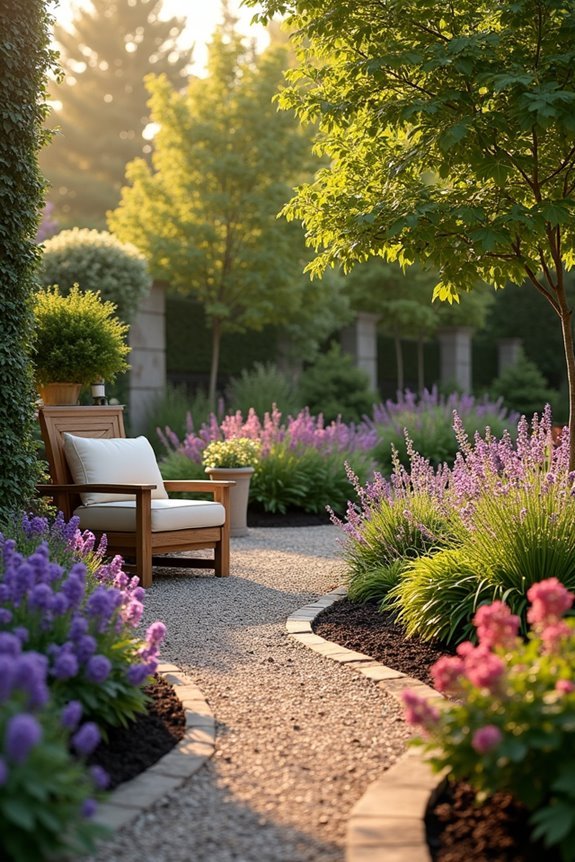
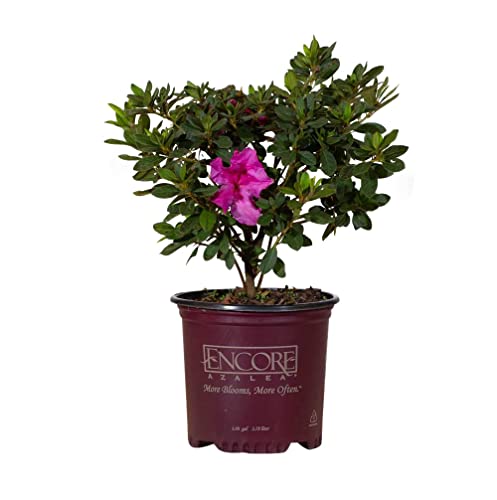
Because flowering shrubs provide sustained color, texture, and structure throughout seasonal shifts, you’ll want to position them deliberately within your garden’s layout. Strategic placement maximizes visual impact while optimizing plant health through proper sunlight exposure and air circulation.
Consider your garden’s focal points and sight lines when determining locations for flowering shrubs. Position taller varieties as backdrops or screens, while placing shorter cultivars along borders and pathways. Group shrubs with complementary bloom times to guarantee continuous color progression throughout seasons.
Evaluate soil conditions, moisture requirements, and hardiness zones before selecting specific species. Space plants according to their mature width to prevent overcrowding. This systematic approach guarantees your flowering shrubs thrive while creating a cohesive, purposeful garden design that enhances your outdoor space’s aesthetic appeal.


Install a Bird Bath
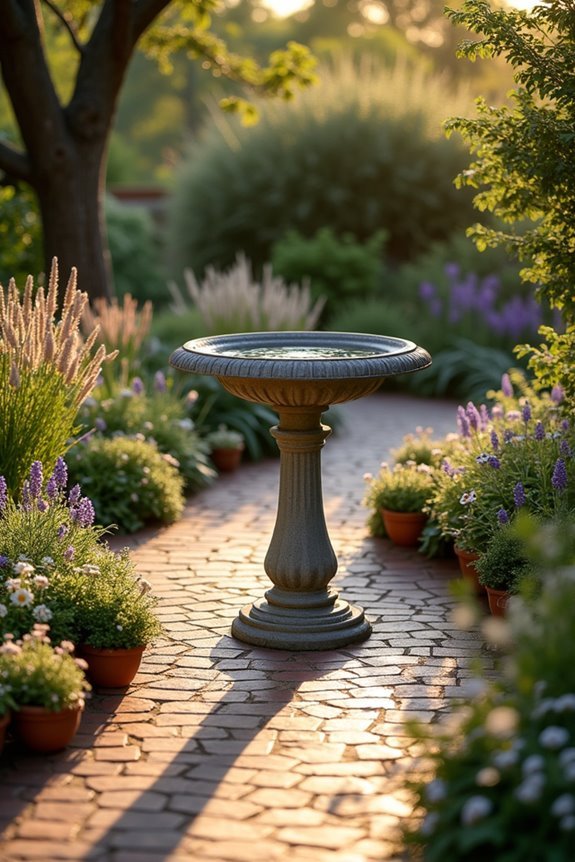
A bird bath serves as both a functional water source and an attractive garden feature that’ll draw wildlife to your outdoor space. You’ll find various bird bath materials available, including ceramic, stone, metal, and concrete, each offering distinct aesthetic and durability characteristics.
Position your bird bath in a location with partial shade and clear sightlines, allowing birds to detect approaching predators. Install it on level ground, approximately 2-3 feet from vegetation to balance safety with nearby perching spots.
Regarding bird bath maintenance, you’ll need to refresh the water every 2-3 days, more frequently during warm weather. Clean the basin weekly using a soft brush to prevent algae buildup and bacterial growth. During winter months, consider draining or using heated baths to maintain water accessibility for visiting birds.


Create Decorative Raised Garden Beds

While bird baths attract wildlife to your garden, raised beds‘ll provide you with organized planting spaces that enhance both functionality and visual appeal. You can construct raised beds using natural materials like cedar, composite wood, or stone, each offering distinct aesthetic qualities and durability levels. Cedar resists decay naturally and weathers beautifully, while composite materials require minimal maintenance. Stone options create permanent, elegant structures.
When selecting raised bed styles, consider your garden’s design scheme. Rectangular beds offer efficient spacing for vegetables, while curved or tiered designs add visual interest. You should assess soil depth requirements based on your plants—typically 12-18 inches for most vegetables and flowers.
Properly constructed raised beds improve drainage, reduce weeding, and allow you to control soil composition precisely. Position beds to maximize sunlight exposure for your specific plantings.


Install Solar-Powered Garden Lights
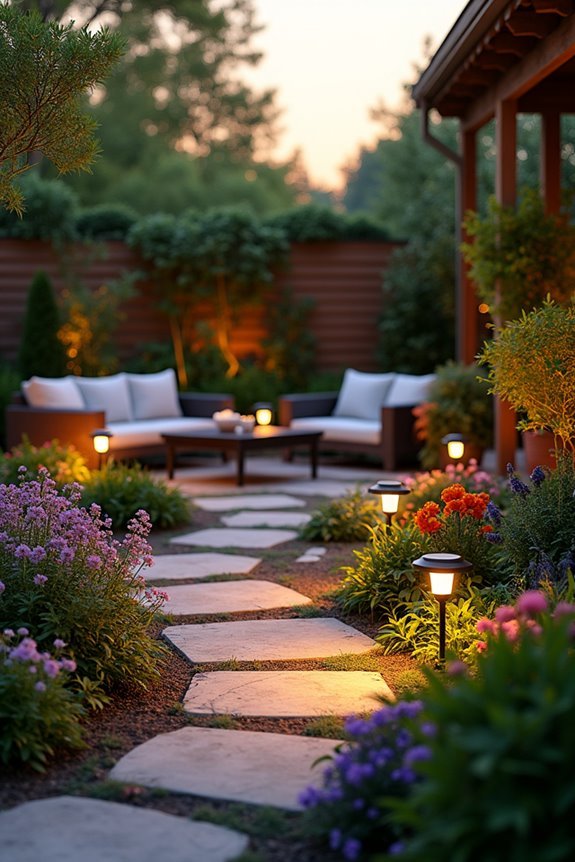
Solar-powered garden lights’ll transform your outdoor space into an illuminated landscape while complementing the structural elements you’ve established with raised beds. These fixtures harness sunlight during daylight hours, storing energy in built-in batteries for nighttime illumination.
Solar lighting benefits include reduced electricity costs and minimal installation requirements—you’ll avoid trenching and wiring expenses. The energy efficiency advantages are substantial: these lights operate independently from your home’s power grid, decreasing your carbon footprint while maintaining consistent outdoor brightness.
Position lights strategically along pathways, near focal points, and around garden perimeters. Select fixtures with motion sensors for added security and functionality. Guarantee adequate sun exposure during installation to maximize battery charging capacity.
Quality solar lights deliver reliable performance throughout seasons, enhancing both safety and aesthetic appeal.


Add Water Features for Ambiance
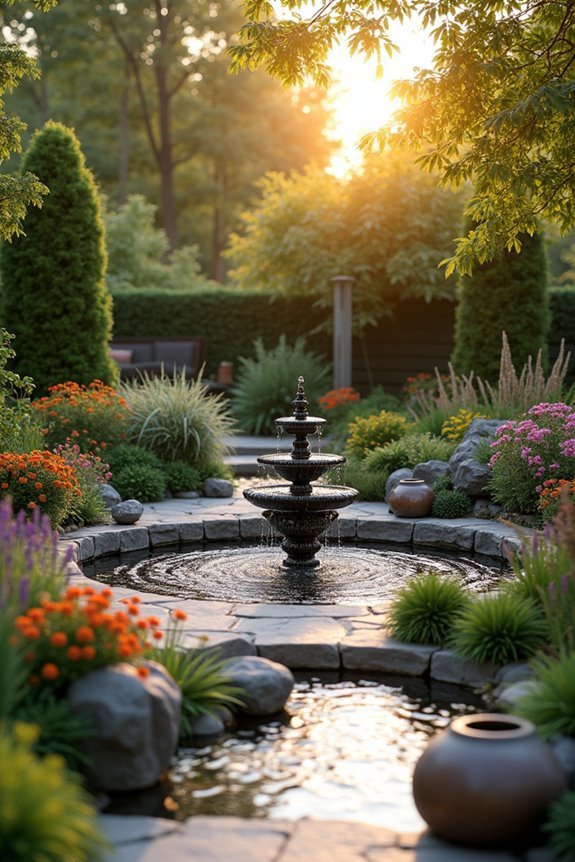
Because water features create dynamic visual and auditory elements, they’ll elevate your garden’s sensory experience beyond static plantings and hardscaping. You can incorporate various options, from fountains to cascading streams, depending on your space and budget.
Mini pond design offers versatile possibilities. You’ll want to select an appropriate location with partial sunlight and level ground. Consider depth requirements if you’re planning aquatic plants or fish, typically twelve to eighteen inches minimum.
Water feature maintenance is essential for longevity. You’ll need to establish a regular cleaning schedule, monitor water quality, and address algae growth promptly. Install a proper filtration system and perform seasonal checks on pumps and circulation equipment.
Strategic placement near seating areas maximizes your enjoyment of the soothing sounds and reflective qualities water provides.


Use Decorative Garden Statuary
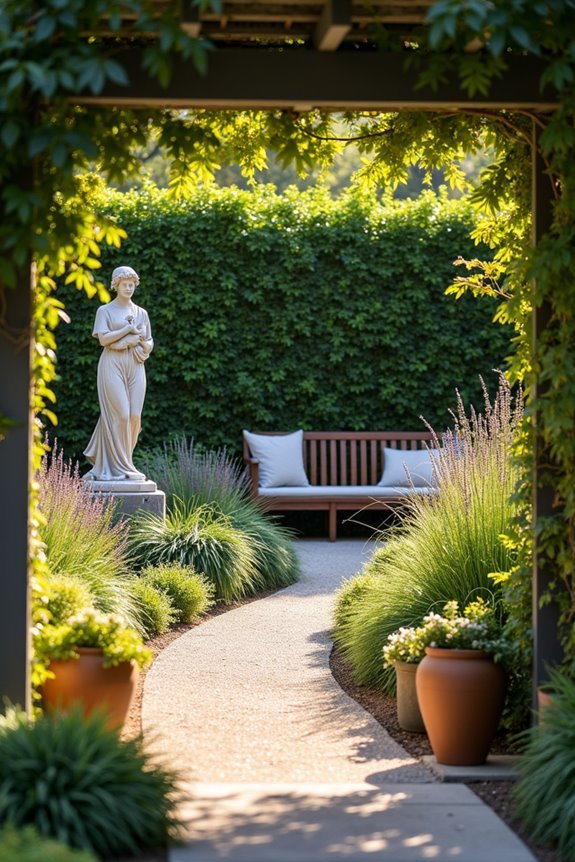
Decorative garden statuary complements water features by introducing focal points that anchor your landscape design with visual interest and structural definition. You’ll find that strategic statue placement creates visual hierarchy and guides visitors’ eyes through your garden spaces.
When selecting garden sculpture ideas, consider your garden’s aesthetic. Bronze, stone, and cast resin offer distinct advantages. Bronze develops patina over time, creating character. Stone provides permanence and classical elegance, while cast resin offers affordability and weather resistance.
You should position statuary at garden intersections, near entryways, or beside plantings for maximum impact. Scale matters greatly—ensure your selections match your space proportions. Unique statue materials like copper or weathered steel introduce contemporary elements. Rotating or repositioning statuary seasonally refreshes your garden’s visual appeal without major redesign investments.


Add Decorative Garden Pathways

Garden pathways serve as essential circulation routes that connect functional spaces while establishing visual continuity throughout your landscape. You’ll want to select pathway materials that complement your garden’s aesthetic while providing durability and practicality. Consider stone, gravel, brick, or composite options based on your climate and maintenance preferences.
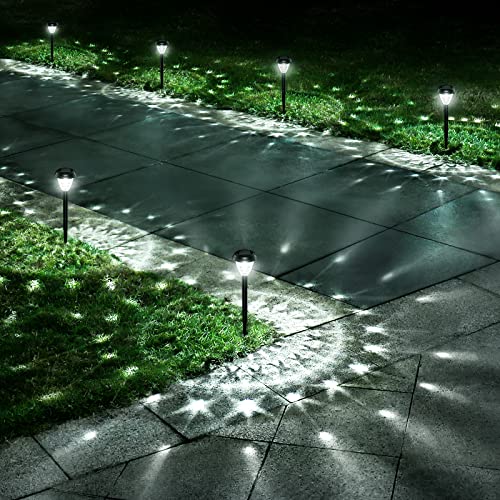
You should integrate pathway lighting to enhance nighttime navigation and create ambiance. LED fixtures positioned along edges or embedded within the surface offer energy-efficient solutions. Proper illumination also improves safety by eliminating tripping hazards.
You’ll achieve ideal results by planning pathways with appropriate width—typically 2-3 feet for single-file routes and 4-5 feet for dual-use paths. Guarantee adequate drainage to prevent water accumulation. Strategic pathway placement guides visitors through your garden while defining spaces and highlighting key features.


Add Fragrant Climbing Vines
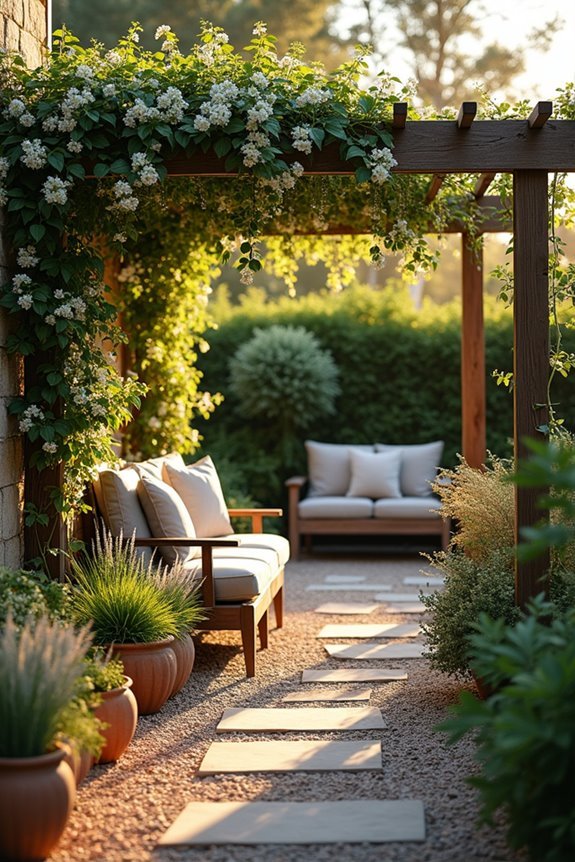
As you expand your garden’s vertical dimension, fragrant climbing vines offer an efficient way to enhance aesthetics while maximizing limited space. These plants deliver dual functionality: visual appeal and aromatic enhancement.
Select vines suited to your climate and sunlight conditions. Clematis, honeysuckle, and jasmine produce fragrant blooms that attract pollinators while creating natural screens. Install sturdy climbing trellises before planting to support mature growth.
Position vines strategically near seating areas, entryways, or windows to maximize fragrance exposure. Space trellises appropriately for air circulation, preventing fungal issues. Water consistently during establishment, then reduce frequency once established.
Prune annually to maintain shape and encourage dense flowering. This systematic approach guarantees your climbing vines flourish while transforming your garden’s vertical surfaces into fragrant focal points.


Install Decorative Garden Fountains
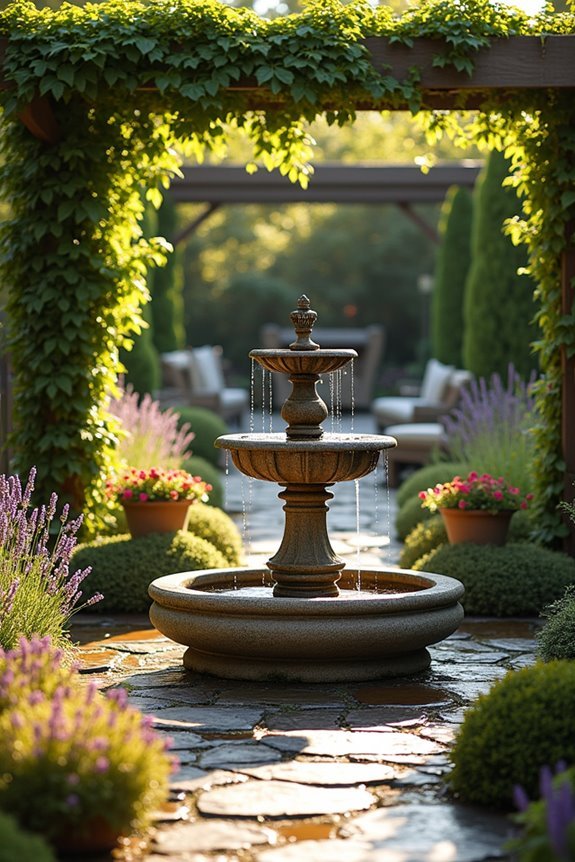
While water features serve multiple purposes in landscape design, fountains provide both visual and auditory focal points that enhance garden ambiance. You’ll find water fountain materials ranging from stone and concrete to fiberglass and ceramic, each offering distinct aesthetic qualities and durability levels. Consider your garden’s style when selecting materials—natural stone complements traditional landscapes, while contemporary designs favor sleek resin options.
Installation requires proper positioning near electrical outlets and adequate drainage. You should place fountains on level surfaces to guarantee stability and best water circulation.
Regarding fountain maintenance tips, you’ll need to clean filters regularly, monitor water levels, and treat the water to prevent algae growth. Winterize outdoor fountains in cold climates by draining and protecting them from freezing temperatures. These systematic care practices guarantee your fountain operates efficiently and maintains its visual appeal throughout seasons.


Colorful Garden Ornaments Attract Wildlife
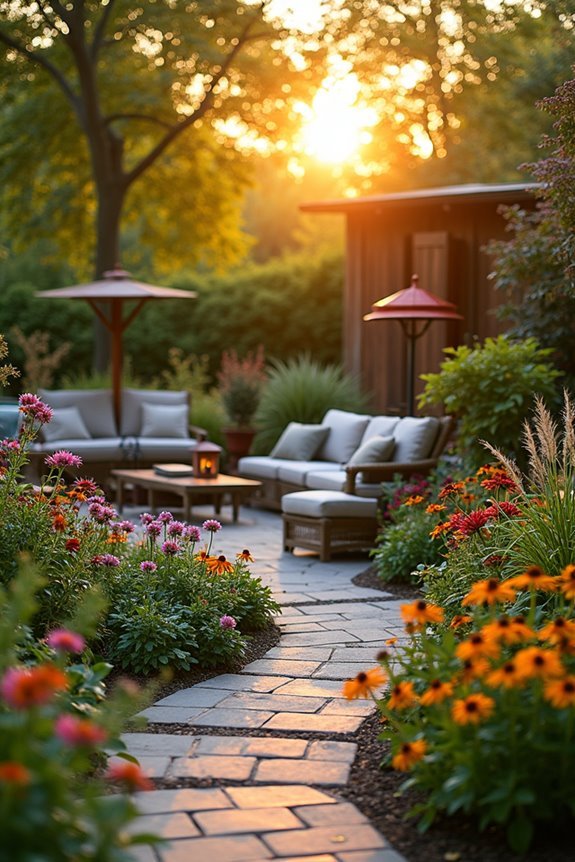
Ornamental garden features in vibrant hues—from bright red birdhouses to jewel-toned gazing balls—function as strategic attractants for wildlife populations. You’ll enhance your garden’s ecological value by selecting eco-friendly materials like recycled metal and sustainably sourced wood for your ornaments.
Positioning colorful decorations near wildlife friendly plants creates ideal habitat zones. You should place bird feeders adjacent to native shrubs that provide shelter and natural food sources. The combination of visual appeal and functional landscaping encourages beneficial insects, birds, and pollinators.
You’ll notice that ornaments in blues, purples, and oranges particularly attract specific species. By thoughtfully integrating decorative elements with native vegetation, you transform your garden into a thriving ecosystem. This systematic approach balances aesthetic appeal with environmental responsibility, creating spaces where beauty and wildlife conservation coexist effectively.
Plant Shrubs Near Seating
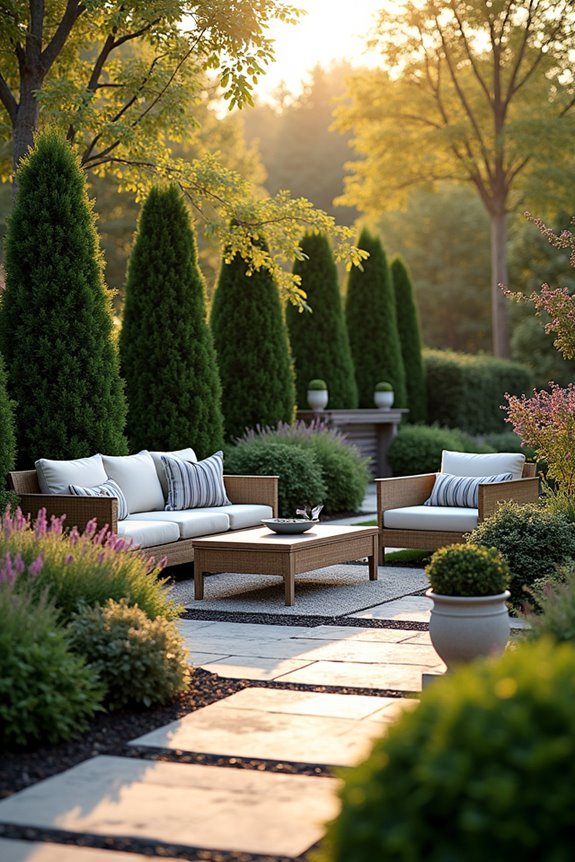
Strategic shrub placement around seating areas enhances both comfort and garden aesthetics. You’ll want to select shrub types that complement your landscape balance while providing garden privacy screening. Consider growth habits carefully—choose species that won’t obstruct views or overcrowd your space at maturity.
Incorporate color schemes that shift through seasonal variations, guaranteeing year-round visual interest. Evergreen shrubs offer consistent screening, while deciduous varieties provide dynamic seasonal changes.
Position shrubs strategically to create windbreaks and reduce noise pollution around your seating zones. You should space plantings according to their mature widths, allowing adequate room for air circulation and maintenance access.
Implement these maintenance tips: prune regularly to control shape, monitor for disease, and fertilize seasonally. This systematic approach guarantees your shrub borders remain attractive, functional, and well-integrated within your garden’s overall design scheme.


Add Whimsical Garden Gnomes
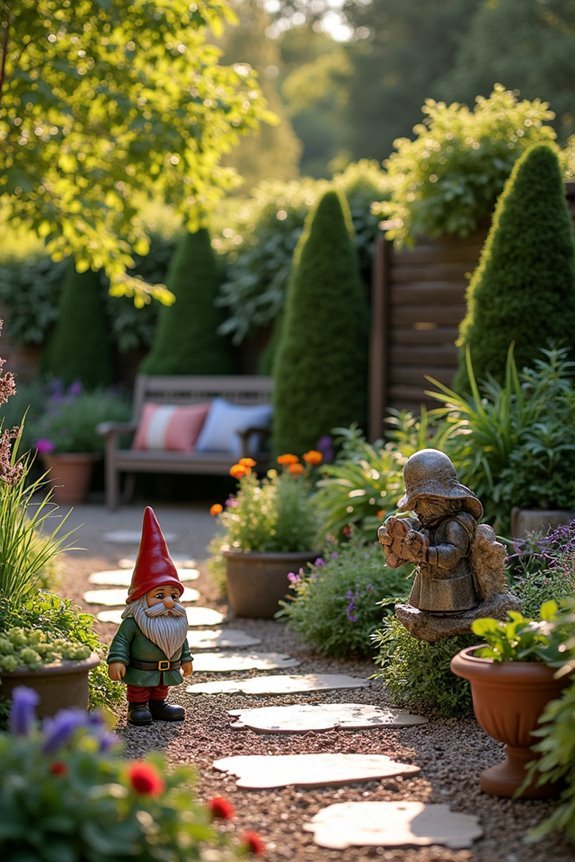
Garden gnomes inject personality and charm into spaces you’ve carefully designed with functional plantings. You’ll find that strategic gnome placement enhances your garden’s visual interest without overwhelming the landscape. Position gnomes near pathways, around seating areas, or clustered in garden beds to create focal points that draw the eye. Select whimsical accessories that complement your garden’s existing aesthetic—fishing gnomes near water features or musician gnomes in shaded corners work particularly well. Verify proper spacing prevents visual clutter while maintaining the playful atmosphere you’re establishing. Choose weather-resistant materials that withstand seasonal changes. Consider varying heights and poses to establish dynamic compositions throughout your garden. These decorative elements transform ordinary spaces into engaging outdoor environments that reflect your personal style while maintaining design coherence.


Add Decorative Garden Edging Borders

Beyond selecting the right materials, you’ll want to focus on the installation techniques that’ll make your edging borders perform effectively. Proper installation guarantees your garden edge styles remain stable and functional throughout seasons.
Start by marking your border line with chalk or string. You’ll need to dig a shallow trench along this line, guaranteeing it’s level and approximately 2-3 inches deep. This foundation prevents shifting and settling.
Consider various border material options: metal edging provides durability and clean lines, while stone offers natural aesthetics. Plastic alternatives deliver affordability and flexibility. Wooden borders create warmth but require maintenance.
Install materials firmly into the prepared trench, checking alignment frequently. Backfill soil against the edging, compacting gently to secure placement. Proper installation prevents migration and maintains your garden’s organized appearance for extended periods.


Add Ceramic Garden Planters
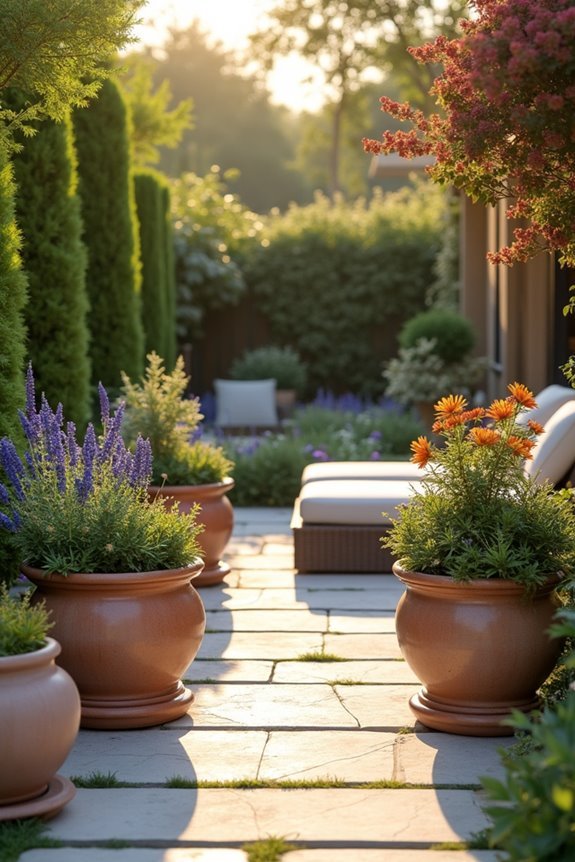
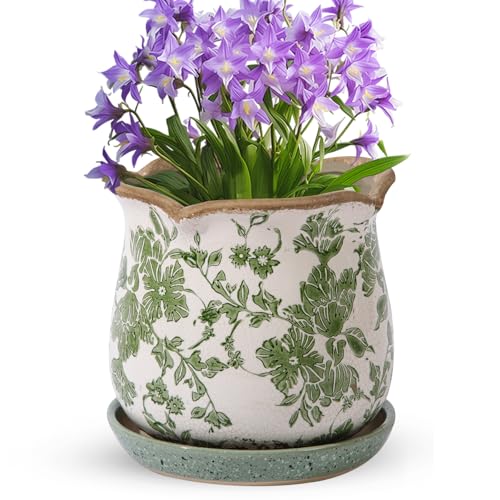
Ceramic planters offer versatile solutions for displaying plants throughout your outdoor spaces. You’ll find ceramic styles range from traditional glazed finishes to contemporary matte surfaces, enabling you to match your garden’s aesthetic precisely.
When selecting planter materials, you should consider ceramic’s advantages: superior drainage capabilities, durability against weathering, and excellent insulation properties for root systems. These characteristics make ceramic superior to many alternative planter materials.
You can position ceramic planters strategically along pathways, patios, and garden beds to create visual focal points. Their weight provides stability in windy conditions, while their porosity allows soil moisture regulation.
Installation requires minimal effort—simply place your planters on level surfaces and fill with quality potting soil. Ceramic’s timeless appeal guarantees your garden maintains sophisticated elegance season after season.

Install Decorative Garden Mirrors
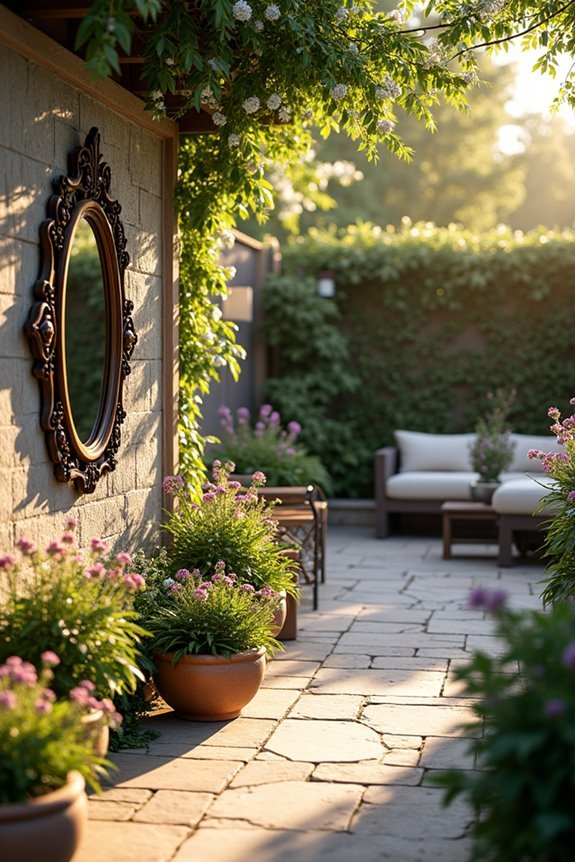
While often overlooked in garden design, mirrors strategically positioned throughout your outdoor space’ll amplify natural light, create depth illusions, and expand perceived dimensions. Select decorative mirror materials that withstand moisture and UV exposure, such as acrylic or weather-treated glass. Position mirrors opposite light sources to maximize reflective garden effects and brighten shadowed areas. Mount mirrors on garden walls, fences, or arbors at varying heights for dynamic visual interest. Guarantee secure installation using rust-resistant hardware and appropriate brackets. Layer mirrors with climbing plants to frame reflections naturally. Orient mirrors toward focal points—fountains, sculptures, or plantings—to draw viewers’ eyes deeper into your garden. These reflective surfaces transform compact spaces into seemingly expansive landscapes while enhancing overall luminosity and aesthetic appeal.