You’re looking to elevate your outdoor space, but standard flowerbeds won’t cut it. Today’s garden design merges verticality with sustainability—think living walls, hydroponic systems, and strategic water collection. Each technique you’ll uncover offers distinct advantages for maximizing growth while minimizing waste. The question isn’t whether these trends work, but which combination suits your specific landscape and vision.
Vertical Garden Walls
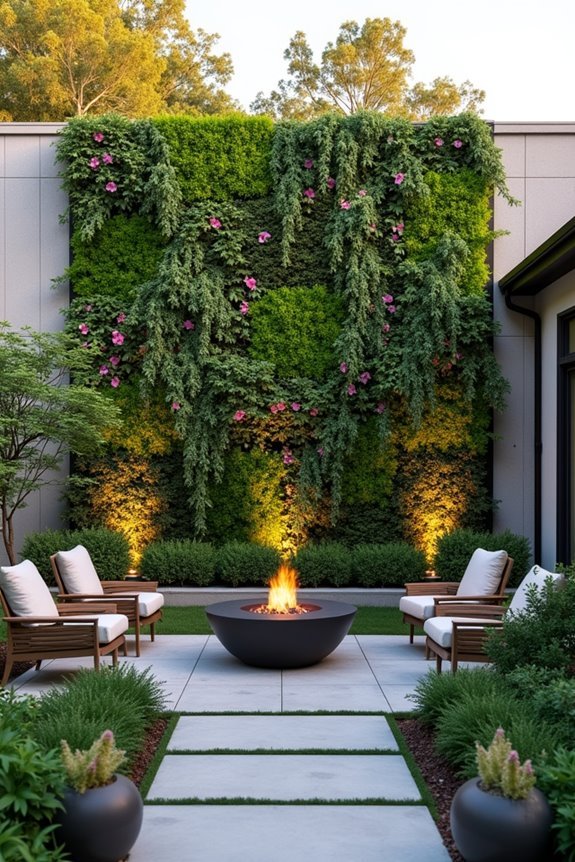
Vertical garden walls transform compact spaces by layering living plants across vertical surfaces, maximizing square footage while creating striking visual focal points. You’ll appreciate how this outdoor design strategy elevates your landscape’s aesthetic appeal while solving spatial constraints.
Install modular planting systems, trellises, or living wall panels to support cascading foliage and flowering specimens. Choose drought-tolerant varieties like sedums and sempervivums for low-maintenance performance. Incorporate drip irrigation systems to guarantee consistent moisture distribution throughout your vertical structure.
The vertical garden benefits extend beyond visual impact—you’re improving air quality, reducing heat absorption, and creating habitat for pollinators. These walls anchor modern outdoor design concepts while offering practical solutions for urban gardeners. Strategic lighting enhances texture and color variations, transforming your vertical garden into a dynamic architectural feature.


Living Wall Plant Combinations
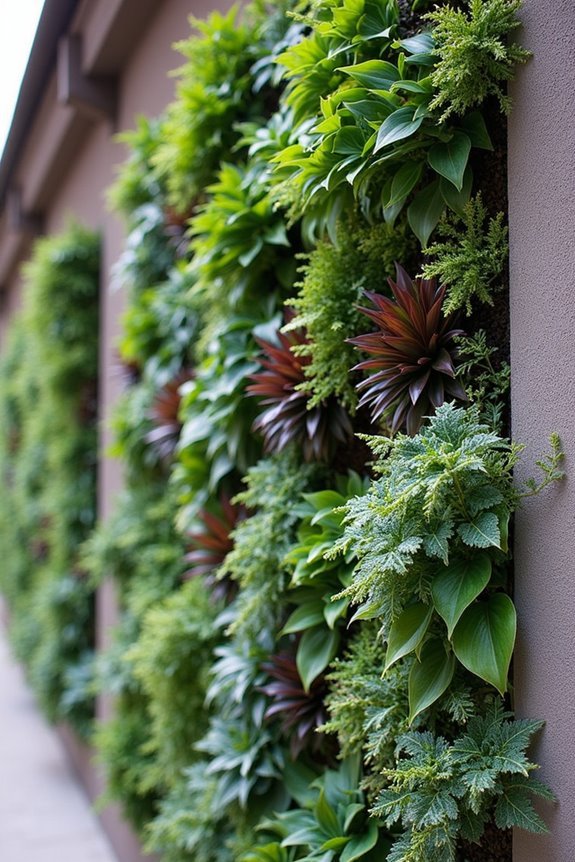
Because successful living walls depend on thoughtful plant pairing, you’ll want to select specimens that complement each other’s growth habits, water requirements, and visual characteristics. Combine trailing succulents like string of pearls with upright sedums to create dimensional layering. Pair shade-tolerant ferns alongside sun-loving ornamental grasses for strategic placement flexibility. Your design aesthetics improve dramatically when you balance foliage colors—silver dusty miller against deep purple heuchera creates striking contrast.
For plant care efficiency, group species sharing identical watering schedules. Incorporate flowering specimens like calibrachoa or diascia to inject seasonal color without overwhelming the composition. Consider texture variation: feathery asparagus fern against waxy-leafed echeveria produces visual intrigue. Guarantee adequate drainage throughout your installation. This strategic approach minimizes maintenance while maximizing visual impact across your vertical surface.


Moss Pole Plant Displays
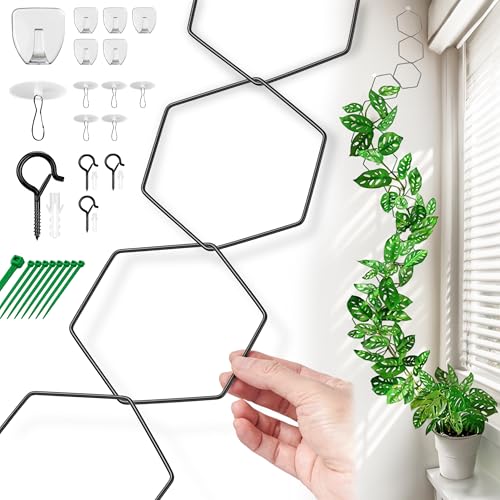
Moss poles create an ideal support structure for climbing arboreal plants that naturally ascend tree trunks in their native tropical habitats. You’ll enhance moss pole aesthetics by selecting climbing plant varieties like Monsteras, Philodendrons, and Rhaphidophoras, which develop fenestrated leaves as they mature upward.
The aerial roots these plants produce naturally grip the moss surface, creating a visually striking display. You can arrange multiple poles at varying heights to establish dynamic vertical composition within your space. The lush green foliage cascading along poles creates textural contrast against surrounding hardscaping or walls.
You’ll maintain these displays by misting the moss regularly, ensuring perfect humidity for root adhesion and plant growth. This design approach transforms limited floor space into dramatic living installations that command visual attention while promoting natural plant development patterns.


Hydroponic Tower Systems
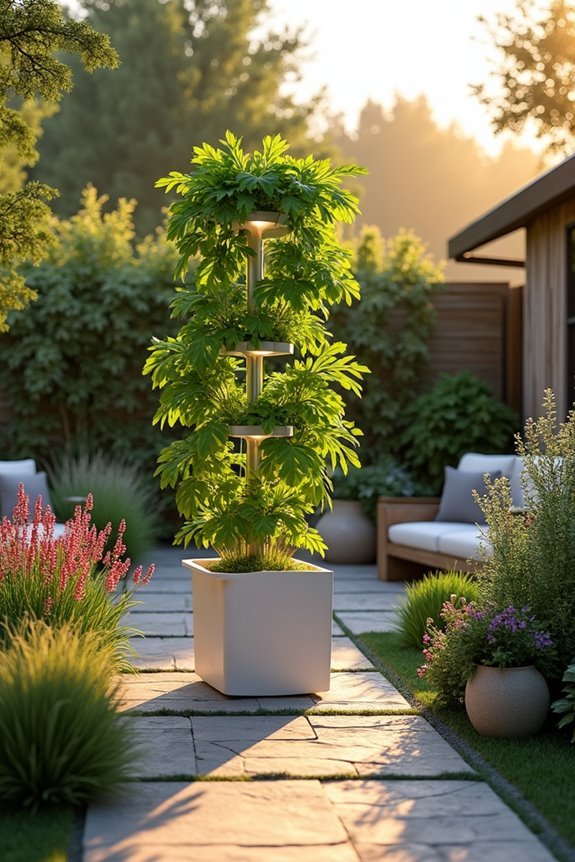
As you seek to maximize growing capacity in compact spaces, hydroponic towers offer a sophisticated alternative to traditional soil-based gardening. These vertical systems stack planting pockets, enabling you to cultivate lettuce, herbs, and strawberries in minimal footprints.
The hydroponic benefits are substantial: you’ll achieve faster growth rates, use 90% less water than conventional methods, and eliminate soil-borne diseases. Your plants receive nutrient-rich solutions delivered directly to roots, enhancing absorption and development.
DIY hydroponics projects are increasingly accessible. You can construct basic towers using PVC pipes, an aquarium pump, and food-grade containers. Stackable commercial kits offer pre-engineered designs with integrated lighting and nutrient systems.
Position your tower near natural light or supplement with LED grow lights. Monitor pH levels between 5.5-6.5 for ideal nutrient uptake. This modern approach transforms your garden design while dramatically increasing yields.


Green Wall Installation Techniques
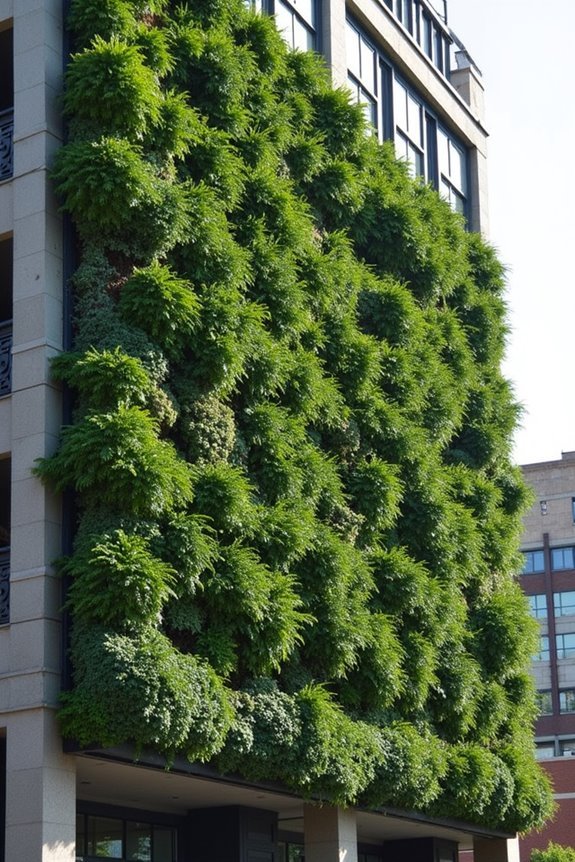
While hydroponic towers concentrate growing capacity vertically, green walls distribute plantings across expansive facade surfaces, transforming entire structures into living ecosystems. You’ll need specialized installation tools including mounting brackets, irrigation tubing, and a sturdy frame system to support the weight of saturated soil and vegetation.
Start by installing a waterproof membrane to protect your wall structure. Secure your modular planting pockets or felt layers firmly to guarantee stability. You’ll route drip irrigation lines along the top, allowing water to cascade downward systematically.
Green wall maintenance requires weekly watering checks, especially during hot months. You’ll prune overgrown sections monthly to maintain aesthetic shape and prevent plant competition. Monitor for pests regularly and fertilize every two weeks during growing seasons. Proper drainage prevents water damage and root rot, extending your green wall’s lifespan markedly.


Succulents for Vertical Spaces
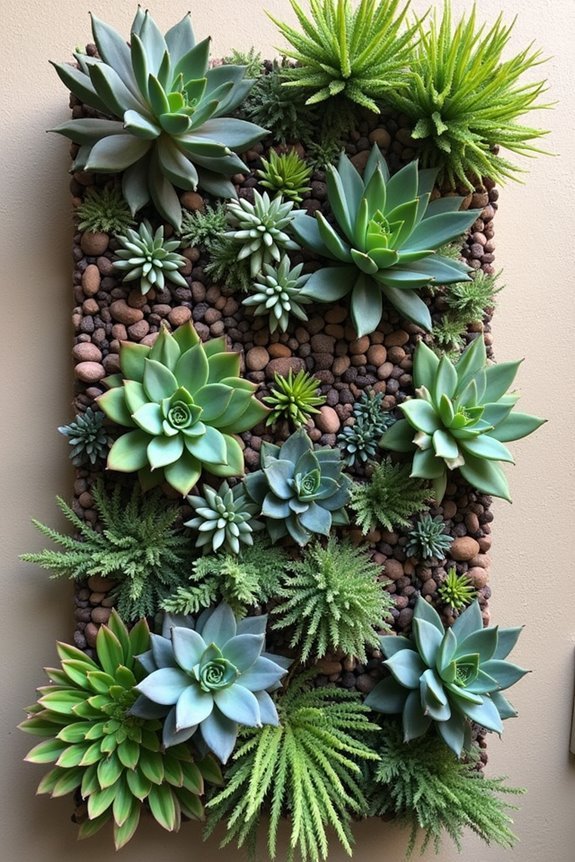
Succulents thrive in vertical installations because their shallow root systems and drought tolerance eliminate many constraints that challenge traditional climbing plants. You’ll find that sedums, echeverias, and sempervivums perform exceptionally well in wall-mounted arrangements, requiring minimal soil depth and infrequent watering schedules.
When planning your vertical design, position sun-loving varieties like aloe and jade on south-facing walls, while shade-tolerant species suit north-facing exposures. Succulent care in vertical spaces demands well-draining substrate—typically a specialized cactus mix—to prevent root rot from water pooling.
You’ll appreciate how these hardy plants create striking visual tapestries with their varied textures, colors, and forms. Stagger plantings at different heights to maximize your wall’s visual impact. Drip irrigation systems work efficiently for vertical succulent gardens, delivering water directly to each plant’s root zone while maintaining drought conditions that these species prefer.


Pocket Garden Planter Boxes
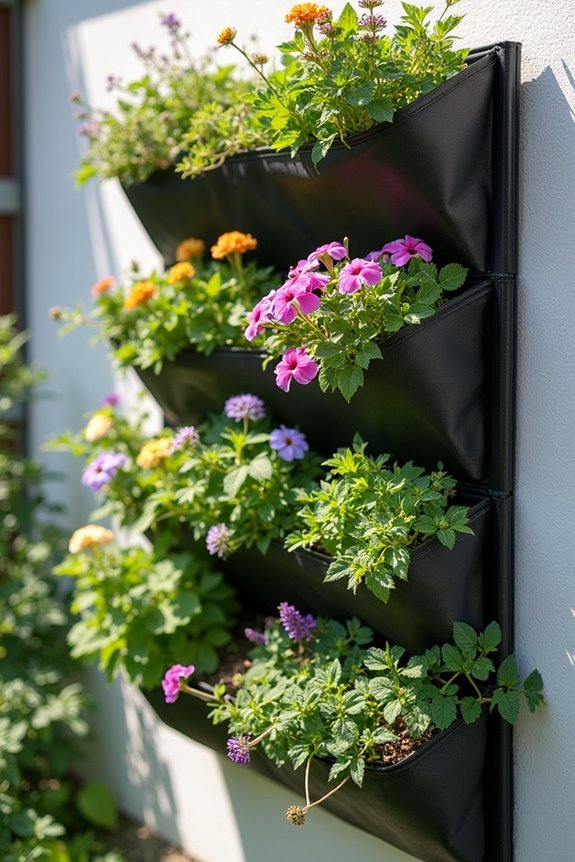
Pocket garden planter boxes offer a modular approach to vertical gardening that’ll transform bare walls into lush, dynamic plant displays. These fabric-lined containers feature individual pockets, each holding specialized soil mixes tailored to specific plant requirements. You’ll maximize your growing capacity using innovative space saving solutions that require minimal floor footprint.
Implement container gardening techniques by strategically spacing pockets based on plant maturity sizes and light exposure. Arrange trailing varieties toward the bottom, mid-height bloomers in center sections, and upright specimens at the top. This vertical stratification creates visual depth and guarantees ideal sunlight distribution.
You’ll appreciate the drainage efficiency built into quality pocket systems—engineered fabric prevents waterlogging while retaining adequate moisture. Rotate plantings seasonally to maintain year-round aesthetic appeal. These modular boxes adapt to various wall dimensions, offering flexible design customization for your outdoor environment.


Trailing Ivy Trellis Designs
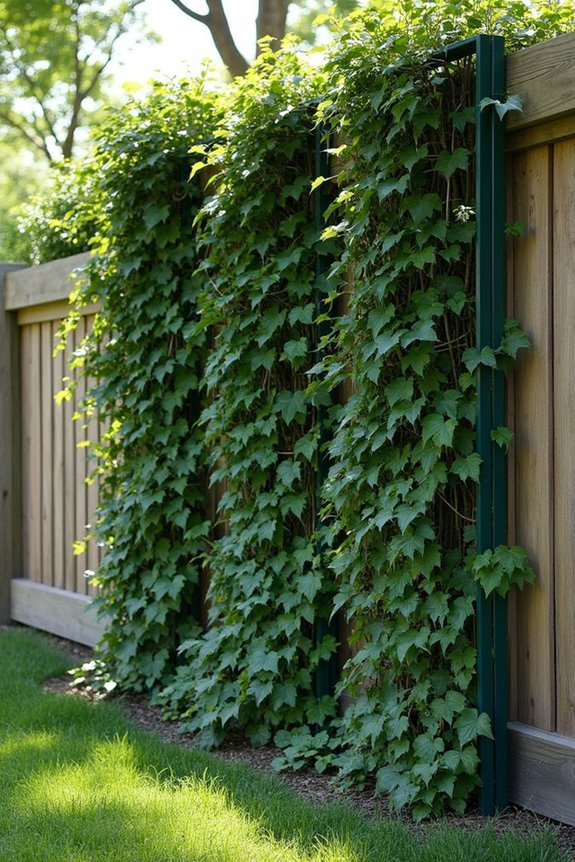
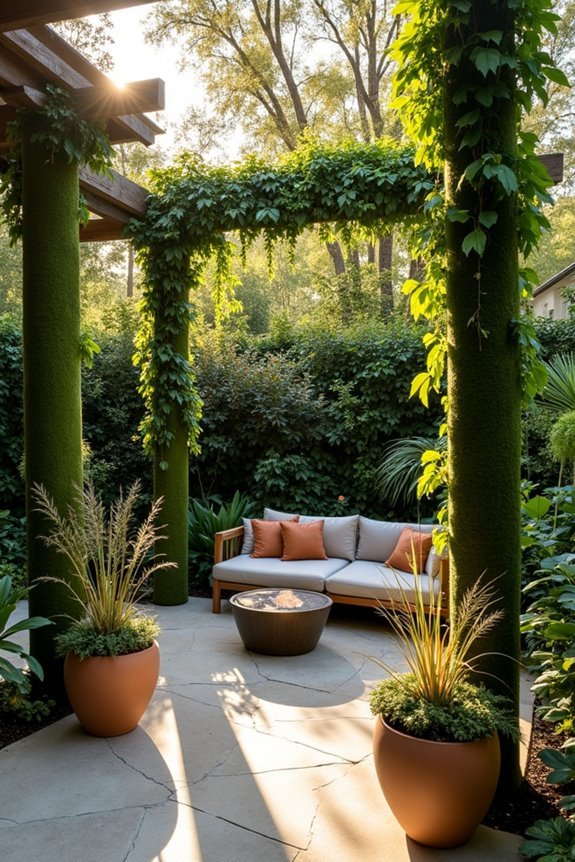
As climbing vines establish themselves on structured frameworks, you’ll create dimensional garden walls that evolve seasonally with cascading foliage and strategic color layering. You can select from multiple ivy trellis styles—lattice, fan, obelisk, or wall-mounted designs—each offering distinct visual impacts and spatial functionality.
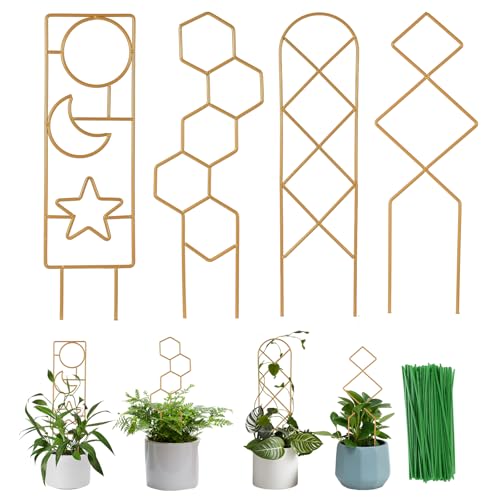
Trellis material options greatly influence your garden’s aesthetic and durability. You’ll find wood provides warmth and natural appeal, requiring periodic maintenance. Metal trellises, including wrought iron and steel, deliver contemporary elegance with superior longevity. Composite materials offer low-maintenance alternatives without sacrificing visual interest.
When positioning your trailing ivy trellis, you’ll consider sunlight exposure, moisture drainage, and desired coverage density. Your ivy variety—English, Boston, or climbing hydrangea—determines growth patterns and seasonal color shifts. Proper spacing between framework sections enables adequate air circulation while supporting vigorous vine development.

Water Feature Integration Points
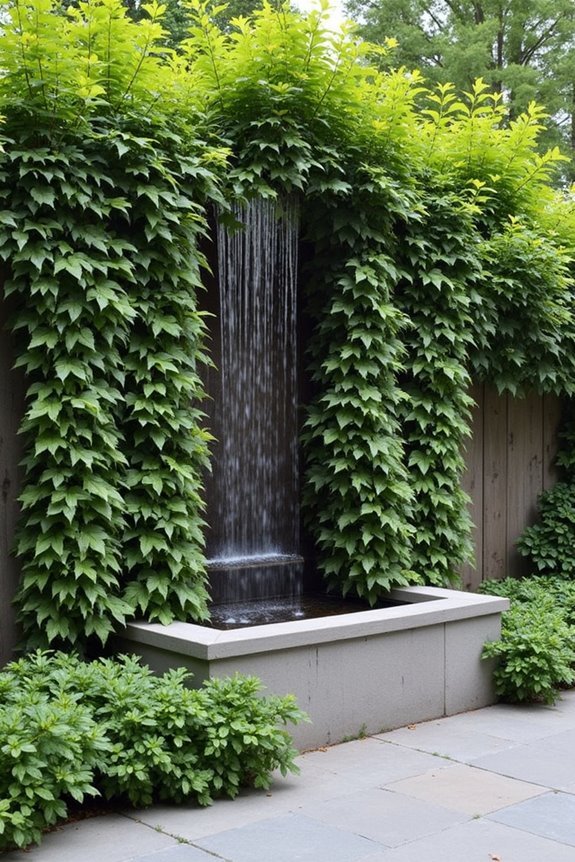
Water features’ll complement your trailing ivy installations by introducing reflective surfaces and moisture-rich microclimates that encourage luxuriant vine growth. Strategic placement near trellises maximizes humidity retention while creating visual depth through water movement.
Consider positioning fountains at garden focal points where cascading water interacts with climbing vines, amplifying textural contrast. Select durable water feature materials—slate, granite, or reinforced concrete—that withstand moisture exposure and complement your hardscape aesthetic.
Incorporate fountain lighting to extend visual interest into evening hours, casting dynamic shadows across ivy foliage. Submerged LED systems create ambient illumination while low-voltage uplighting emphasizes architectural trellis elements.
Ensure adequate drainage around feature bases to prevent root rot and structural degradation. This integration transforms your garden into a multisensory environment where water and vegetation establish cohesive, thriving ecosystems.


Rainfall Collection Systems
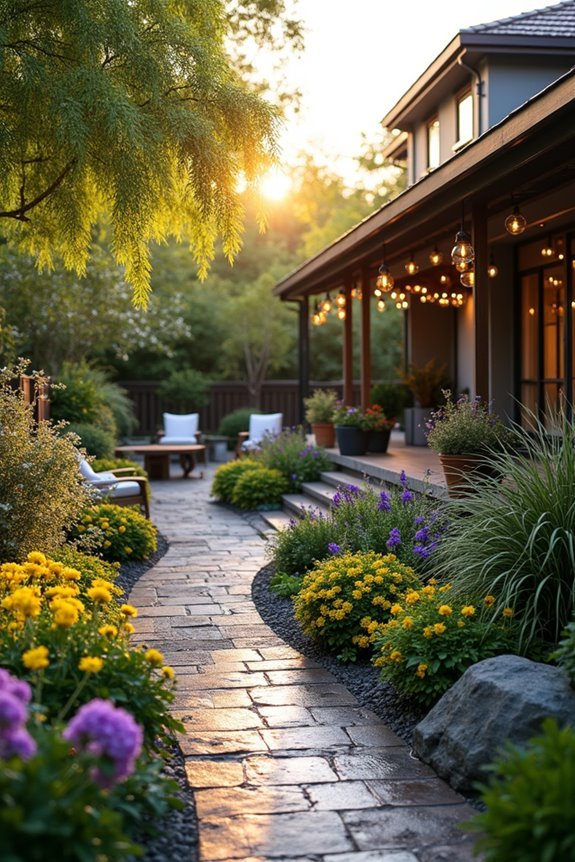
By capturing runoff from your roof and hardscape surfaces, you’ll establish a sustainable water source that reduces municipal demand while nourishing your garden’s moisture-dependent plantings. Install gutters and downspouts directing water into above-ground or underground cisterns for rooftop collection. You’ll benefit from cost-efficient solutions that slash irrigation expenses while promoting garden sustainability.
For DIY installation, position tanks on level ground with overflow valves and first-flush diverters to eliminate debris. Implement multi-stage filtration methods using screens, sand, and activated charcoal to guarantee water quality. Your climate adaptability depends on tank sizing—calculate seasonal rainfall patterns specific to your region.
Maintenance tips include quarterly gutter cleaning, filter replacement, and algae prevention through opaque tank materials. These eco-friendly systems transform water conservation from aspiration into actionable rainwater usage.